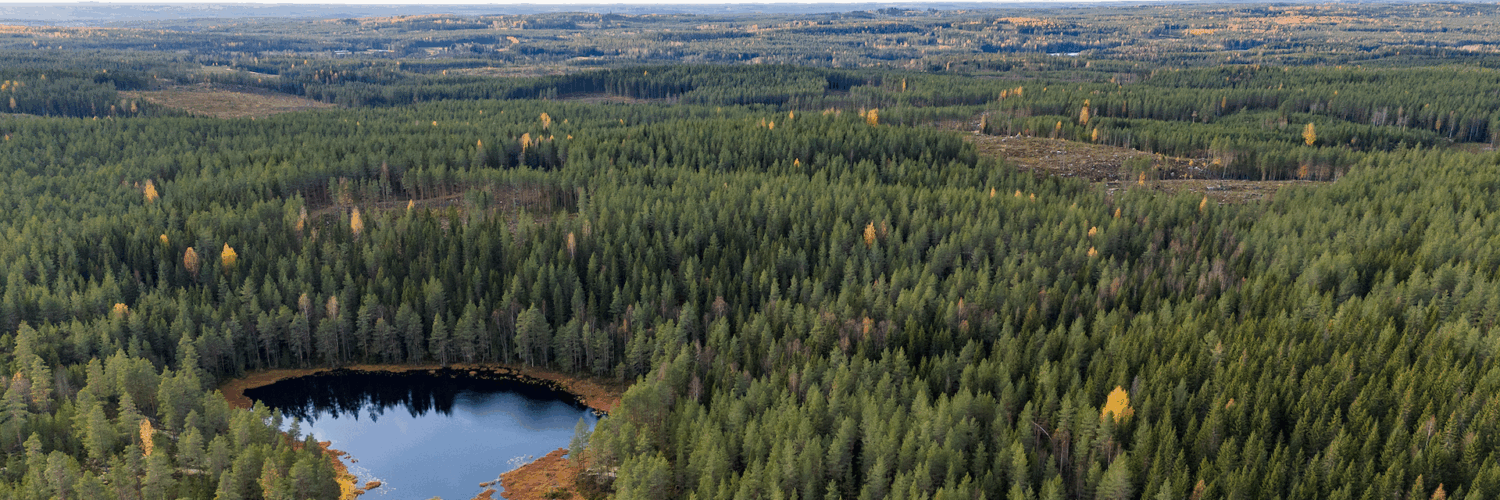
Finsilva’s forests reflect a major shift—from industrial timber assets to a modern model of natural capital.
The majority of the forests currently owned by Finsilva originally belonged to the companies G. A. Serlachius, Ab J. W. Enqvist, and Metsäliiton Teollisuus. From the turn of the 20th century, Gösta Serlachius systematically expanded his forest holdings. However, in 1925, the Finnish Parliament passed the so-called Lex Pulkkinen, which prohibited companies from purchasing forest land from the peasantry.
Following this, G. A. Serlachius Ltd began acquiring forests from other firms. The most significant transaction occurred in 1965, when Serlachius purchased the forests of the Tampere-based enterprise Ab J. W. Enqvist, totalling 14,500 hectares. This brought the company’s total holdings to approximately 68,300 hectares. By 1983, the forest assets of G. A. Serlachius Ltd had grown to nearly 83,000 hectares.
For G. A. Serlachius Ltd, the forests were, above all, an economic resource. When the price of raw timber was high, the company harvested more extensively from its own forests. As these forests represented a financial asset, they had to be managed according to the best silvicultural practices of the time. G. A. Serlachius Ltd commissioned the enterprise Thomén Metsätoimisto to provide timber stock estimates and ten-year harvesting recommendations. The company’s own forest department, established in 1908, was responsible for planning harvests and other forest management activities.
In the post-war years, the economic utilisation of forest resources was a vital component in building the Finnish welfare state. It was often said that Finland “stood on wooden legs”, as a significant proportion of export revenue was derived from forest industry products. To accelerate growth, society turned towards intensive forestry. This era was characterised by systematic clear-cutting, heavy soil preparation, and the drainage of wetlands.
Perceptions of forests underwent a profound transformation in the 1970s as the nature conservation movement gained momentum. Increasingly, forests were viewed as unique ecosystems where harvesting required careful deliberation and systematic planning. This placed the conservation movement and the forest industry on an inevitable collision course, evidenced by the major “forest wars” of the 1980s and 1990s.
At the turn of the millennium, discussions centred on global warming, the greenhouse effect, and the impact of atmospheric pollution on woodlands. The role of forests in global climate change became more prominent, and by the turn of the 2020s, the conversation had shifted towards strengthening forest biodiversity and halting nature loss.
In 2021, HM Treasury published an independent review on the economics of biodiversity and the impact of its loss on the economy, the environment, and human well-being. The report was led by Professor Sir Partha Dasgupta, Emeritus Professor of Economics at the University of Cambridge, and his team; it fundamentally altered the discourse regarding the relationship between biodiversity and the economy.
The Dasgupta Review is credited with doing for the biodiversity crisis what the Stern Review (2006) achieved for climate change. While specific solutions for climate change may not be directly applicable to halting biodiversity loss, both are united by the strategy of harnessing market forces to address a global crisis.
Natural capital comprises geology, minerals, water, and air, as well as all living and non-living nature. The report indicates that humanity is consuming this capital faster than it can regenerate. This leads to a decline in biodiversity, which incrementally diminishes human well-being.
According to the report, the fundamental problem is that the “market value” of nature is not sufficiently reflected in the economy, despite humanity’s total reliance on nature and the services it provides. Nature should be regarded as a form of capital, given that the economy is fundamentally dependent on the natural world and the maintenance of biodiversity. To date, humanity has consumed this natural capital in an unsustainable manner, while markets have failed to acknowledge or curb this depletion.
In accordance with the strategy finalised in 2021, Finsilva is being developed as a forest and natural capital company. The objective is a balanced natural capital economy in which the loss of biodiversity is halted. The role of forests at the heart of sustainable development is widely recognised and generally accepted as a means of maintaining and strengthening biodiversity. With its new strategy, Finsilva aims to shape the domestic natural capital markets emerging around biodiversity.
Finsilva’s goal is the responsible and multifaceted utilisation of forest and natural capital. Simultaneously, the company generates economic, social, and ecological well-being from nature, striving to reconcile human, environmental, and financial interests. As a natural capital company, Finsilva aims to practise sustainable forestry, create the necessary conditions for renewable energy, develop environmental compensation markets, support research that promotes biodiversity, and enhance the recreational value of nature.
Among the natural capital ecosystem services offered by Finsilva, the sale of sustainably produced raw timber to the forest industry continues to represent the most significant share of its revenue. To secure market acceptance for its timber, Finsilva committed in 2017 to the FSC standard, which governs its forestry practices.
Over more than a century, perceptions of the forest as capital have undergone a significant transformation. Initially, forests were viewed almost exclusively as an economic resource for the production of timber. Since then, alternative perspectives on forest values have emerged alongside this view—values which ultimately possess economic significance in their own right. These can generate new, market-based activities on a broader scale, while simultaneously contributing to climate change mitigation and the enhancement of biodiversity.
The Story of a Forest Holding – Finsilva’s Forests
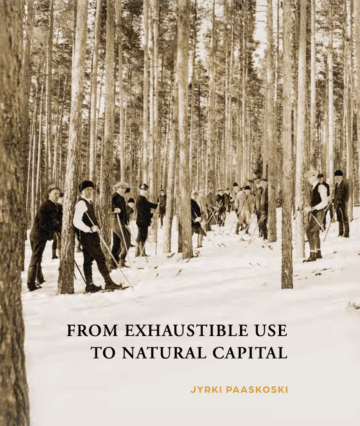
In 2025, Finsilva published a historical study exploring the eventful past of both the forests owned by Finsilva and their owners. Read the English-language volume (PDF): From Exhaustible Use to Natural Capital – The Story of Finsilva’s Forests.